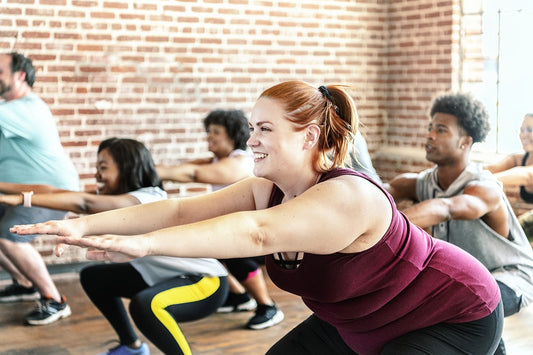
Hoe begin je met sporten als je overgewicht hebt?
Beginnen met een trainingsroutine als je overgewicht hebt, kan ontmoedigend lijken, maar dat hoeft niet zo te zijn. Met het juiste plan kun je kracht opbouwen, je gewrichten beschermen, je stofwisseling verbeteren en de vaart erin houden om op een gezonde manier af te vallen. Bij Shapely ontwerpen we ondersteunende hulpmiddelen zoals onze afslankpleister die passen in een verstandige routine – een routine gericht op consistentie, herstel en het vormgeven van je lichaam op de lange termijn.
Begin met veiligheid en een ondersteunende mindset.
Als je net begint met bewegen of na een lange pauze weer begint, overleg dan met een zorgverlener – vooral als je last hebt van gewrichtspijn, diabetes, hoge bloeddruk of andere medische aandoeningen. Een kort consult helpt je om een veilige start te maken en terugvallen te voorkomen.
Kies voor een mentaliteit van geleidelijke vooruitgang. Streef niet naar perfectie, maar naar stabiele gewoonten die je dagelijkse activiteit verhogen en je calorieverbranding langzaam laten groeien. Vier successen die niet direct op de weegschaal te zien zijn, zoals een betere nachtrust, een beter humeur en kleding die comfortabeler zit – dit zijn vroege tekenen dat je metabolisme en lichaamssamenstelling verbeteren.
Bouw een fundament met dagelijkse beweging.
Verhoog vóór gestructureerde trainingen je NEAT (non-exercise activity thermogenesis) – de energie die je verbrandt door dagelijkse beweging. Het is een gewrichtsvriendelijke en effectieve manier om gewichtsverlies op gang te brengen.
- Begin met wandelingen van 10 minuten, twee of drie keer per dag.
- Doe de spreektest: je moet in staat zijn om korte zinnen te spreken terwijl je beweegt.
- Kies voor activiteiten met weinig impact: rustig fietsen, wandelen langs het water of korte danspauzes thuis.
- Stel vaste gewoonten in: loop na de maaltijd, ga staan tijdens telefoongesprekken of neem de trap wanneer mogelijk.
Deze kleine oefeningen tellen op, leren je lichaam meer te bewegen en bereiden je voor op gestructureerde training.
Krachtraining voor beginners met een grotere lichaamsbouw
Krachttraining is cruciaal voor het behoud van spiermassa, het ondersteunen van de ruststofwisseling en het vormen van het lichaam. Twee tot drie sessies per week kunnen een merkbaar verschil maken in energie en stabiliteit.
- Begin met basisoefeningen met je eigen lichaamsgewicht: opstaan vanuit een stoel, push-ups tegen de muur, push-ups op een schuine ondergrond (aanrecht) en step-ups.
- Gebruik ondersteunende hulpmiddelen: Weerstandsbanden en lichte dumbbells maken geleidelijke opbouw mogelijk.
- Train in reeksen die je zelf kunt bepalen: 1-3 sets van 8-12 herhalingen, waarbij je 1-2 herhalingen overhoudt voor elke set.
- Bescherm uw gewrichten: kies een stabiele ondergrond, draag ondersteunende schoenen en beweeg binnen pijnvrije bewegingsbereiken.
Voor een eenvoudige routine die je thuis kunt doen zonder apparatuur, bekijk onze gids met workouts voor beginners . Door deze basisoefeningen consequent te doen, bouw je zelfvertrouwen op en stimuleer je je stofwisseling.
Cardio met lage impact die gewrichtsvriendelijk is
Cardiotraining bevordert de hartgezondheid en de calorieverbranding zonder dat er een hoge intensiteit nodig is. Streef naar 20-30 minuten, 3-4 dagen per week, en begin in een rustig tot gemiddeld tempo.
- Wandelintervallen: 2 minuten rustig, 1 minuut stevig doorlopen, herhalen.
- Wateroefeningen: Zwemmen of wateraerobics verminderen de belasting van de gewrichten.
- Fietsen of crosstrainer: soepele, gecontroleerde beweging die de knieën ontziet.
- Stoelcardio: zittend marcheren en armzwaaien als staan oncomfortabel is.
Het doel is duurzame beweging die je kunt volhouden en geleidelijk kunt verbeteren.
Mobiliteit, herstel en slaap
Herstel versnelt de resultaten. Het helpt spierpijn te verminderen en zorgt voor consistentie.
- Opwarming: 5 minuten rustig marcheren of armcirkels maken om de lichaamstemperatuur te verhogen.
- Mobiliteit: Focus op enkels, heupen en borstwervelkolom voor soepelere en veiligere bewegingen.
- Afkoelen: Rustig wandelen en lichte rek- en strekoefeningen voor gespannen spieren.
- Slaap: streef naar 7-9 uur; dit ondersteunt de regulatie van de eetlust en vetverbranding.
Voeding die beweging stimuleert
Je hoeft geen strikt dieet te volgen. Streef naar evenwichtige maaltijden die je trainingen, gewichtsverlies en een stabiele energievoorraad ondersteunen.
- Eiwitten bij elke maaltijd: Helpt bij het behoud van spiermassa – denk aan eieren, Griekse yoghurt, tofu, vis of peulvruchten.
- Vezels voor een verzadigd gevoel: Groenten, fruit, bonen en volkorenproducten helpen de eetlust te beheersen.
- Slimme voorbereiding op de training: een banaan met pindakaas of yoghurt 60 minuten voor de training.
- Na de training: Eiwitten en koolhydraten (zoals kip met rijst of een smoothie) bevorderen het herstel.
- Hydratatie: Drink regelmatig kleine slokjes water; voeg elektrolyten toe als je veel zweet.
Hulpmiddelen zoals de Shapely afslankpleister kunnen een gestructureerd plan aanvullen door routines en doelen op het gebied van lichaamsvorming te ondersteunen. Gebruik ze in combinatie met een voedzaam dieet en regelmatige lichaamsbeweging, en niet als een op zichzelf staande oplossing.
Personaliseer je plan
Iedereens lichaam slaat vet anders op, vooral rond de buik. Inzicht in de belangrijkste factoren die hieraan bijdragen – stress, slaap, hormonen of overeten – helpt je bij het kiezen van de juiste strategieën. Onze korte quiz over buikvet kan je helpen patronen te herkennen, zodat je prioriteit kunt geven aan de gewoonten die het meeste opleveren.
Motivatie- en consistentietips
- Microdoelen: Neem je voor om 10 minuten te besteden. Als je je goed voelt, ga dan door; zo niet, dan heb je alsnog gewonnen.
- Gewoontestapeling: combineer lichaamsbeweging met een bestaande routine, zoals wandelen na de koffie.
- Houd de niet-meetbare successen bij: meer herhalingen, minder gewrichtspijn, een beter humeur.
- Omgevingsfactoren zijn belangrijk: zet je schoenen bij de deur en leg je kleren de avond ervoor klaar.
- Ondersteuningssysteem: Een vriend, groep of coach helpt je om je aan je voornemens te houden.
Voorbeeld van een 7-daags beginnersplan
Pas de duur en intensiteit aan op basis van uw huidige conditie en medisch advies.
- Dag 1: 20 minuten wandelen (rustig tempo). Mobiliteitsoefeningen voor heupen en enkels.
- Dag 2: Krachttraining A: opstaan vanuit een stoel, push-ups tegen de muur, roeien met een elastische band, 2 sets van elke oefening. 10 minuten uitwandelen om af te koelen.
- Dag 3: Cardio met lage impact: 5 x 3 minuten stevig hardlopen met 2 minuten rust ertussen.
- Dag 4: Actief herstel: lichte rek- en strekoefeningen of wandelen in het water, 15-20 minuten.
- Dag 5: Krachttraining B: step-ups, presses op het aanrecht, heupbuiging met lichte gewichten, 2-3 sets van elke oefening.
- Dag 6: Een langere, rustige wandeling of fietstocht van 25-30 minuten in een tempo waarbij je nog kunt praten.
- Dag 7: Rust en beweging. Geef prioriteit aan slaap en voldoende vochtinname.
Wanneer door te gaan?
Zodra de trainingen haalbaar aanvoelen, verhoog je telkens één variabele: voeg 5 minuten cardio toe, een extra set of iets meer weerstand. Kleine, consistente aanpassingen stimuleren vetverbranding, beschermen de gewrichten en houden de motivatie op peil.
De kern van de zaak
Beginnen met sporten als je overgewicht hebt, draait om het opbouwen van zelfvertrouwen, niet om het nastreven van perfectie. Focus op beweging met een lage impact, basiskrachttraining en een goede rustperiode om je metabolisme te stimuleren en je lichaam op een veilige manier in vorm te brengen. Met een doordacht voedingspatroon en ondersteunende hulpmiddelen zoals de afslankpleister van Shapely, als onderdeel van een evenwichtige routine, creëer je blijvende gewoonten die leiden tot duurzaam gewichtsverlies. Begin vandaag nog met één kleine stap – je toekomstige, actievere zelf zal je dankbaar zijn.